
Germany: nominal wages rise as employment falls in the third quarter
Germany’s Federal Statistical Office published detailed third-quarter 2026 figures on 25 November. Economic output edged up from the previous quarter, while employment fell year on year and average nominal wages increased.
Germany’s Federal Statistical Office published detailed third-quarter 2026 figures on 25 November. Economic output edged up from the previous quarter, while employment fell year on year and average nominal wages increased.
Economic output and employment
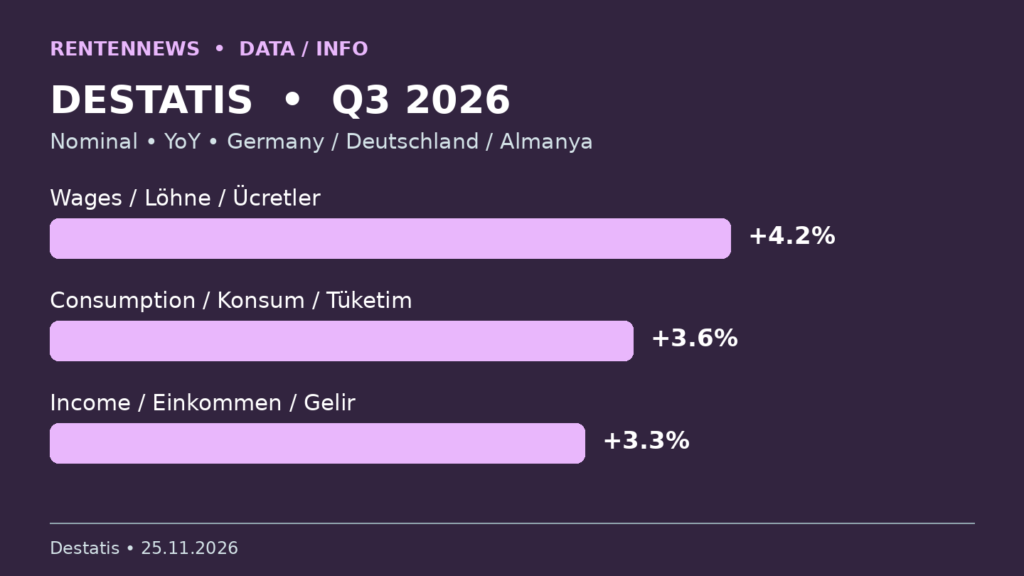
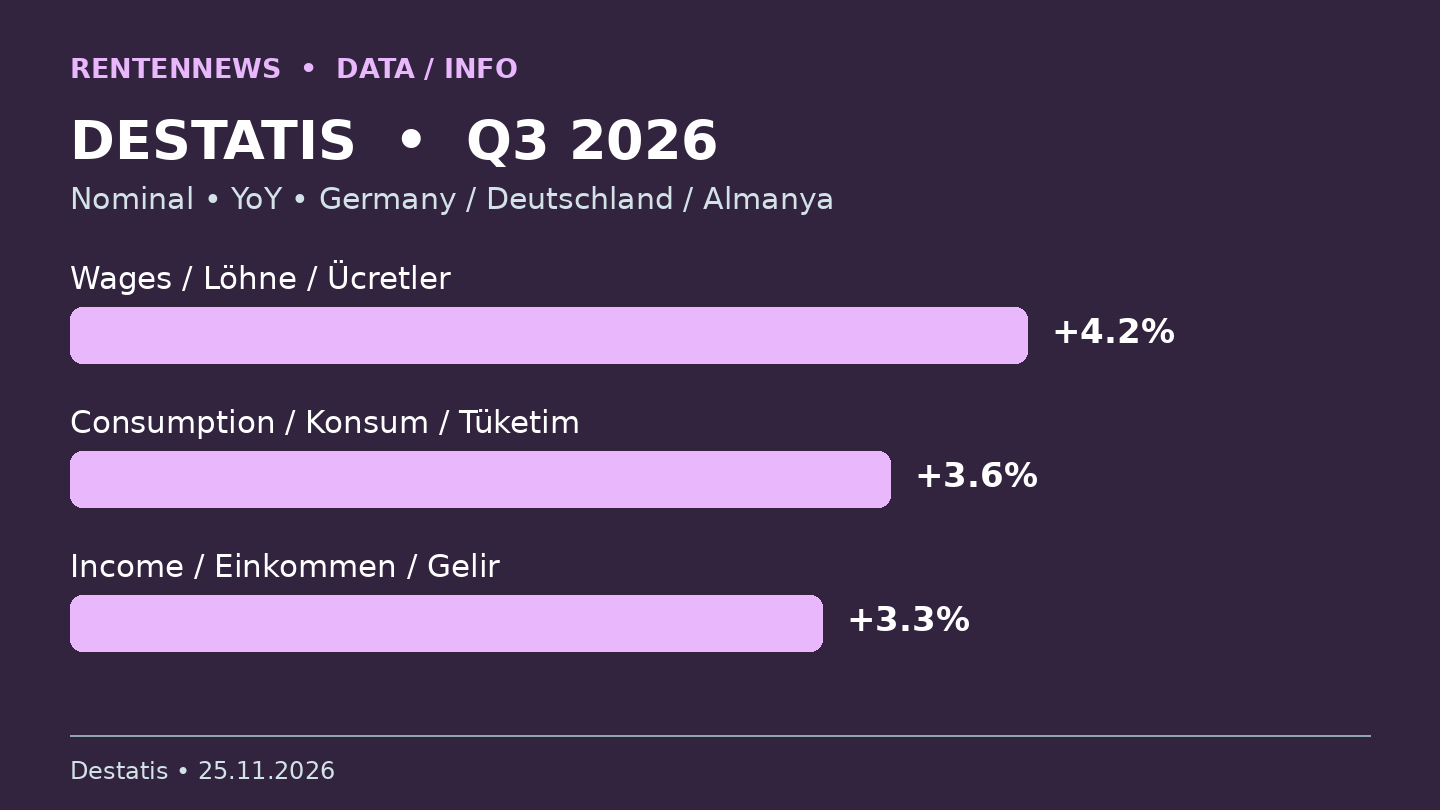
Price, seasonally and calendar-adjusted gross domestic product increased by 0.1% from the previous quarter, revised from an initial estimate of 0.2%. Around 45.7 million people were employed domestically, 222,000 fewer than a year earlier, a decrease of 0.5%. Destatis pointed to declines in manufacturing-related activities and construction. Average gross and net wages and salaries per employee each increased by 4.2% in nominal terms compared with the third quarter of 2025.
What the figures mean for household budgets
Household nominal consumption expenditure increased by 3.6%, while disposable income increased by 3.3%. The household savings ratio was 9.1%, down from 9.4% a year earlier. Nominal growth is not equivalent to an increase in real purchasing power; prices also matter. These aggregate wage figures do not determine an individual salary or pension payment, nor do they establish Germany’s 2027 pension adjustment rate. For personal budgeting, compare your actual income with recurring expenses rather than assuming that the statistical average applies to you.
Official source: Destatis →
25.11.2026
Share
Document Preparation Check
Three short choices. Request your preparation list by email. No identity document, insurance number or medical information required.