 Start pension pre-check ↗
Housing and Property in Türkiye
Choosing a flat in Türkiye: test the route for daily life
Do not judge a flat at its front door alone: try the route from the pavement into the flat and onward to healthcare that suits you. The useful test is whether you can manage it with your own mobility aids and under realistic conditions.
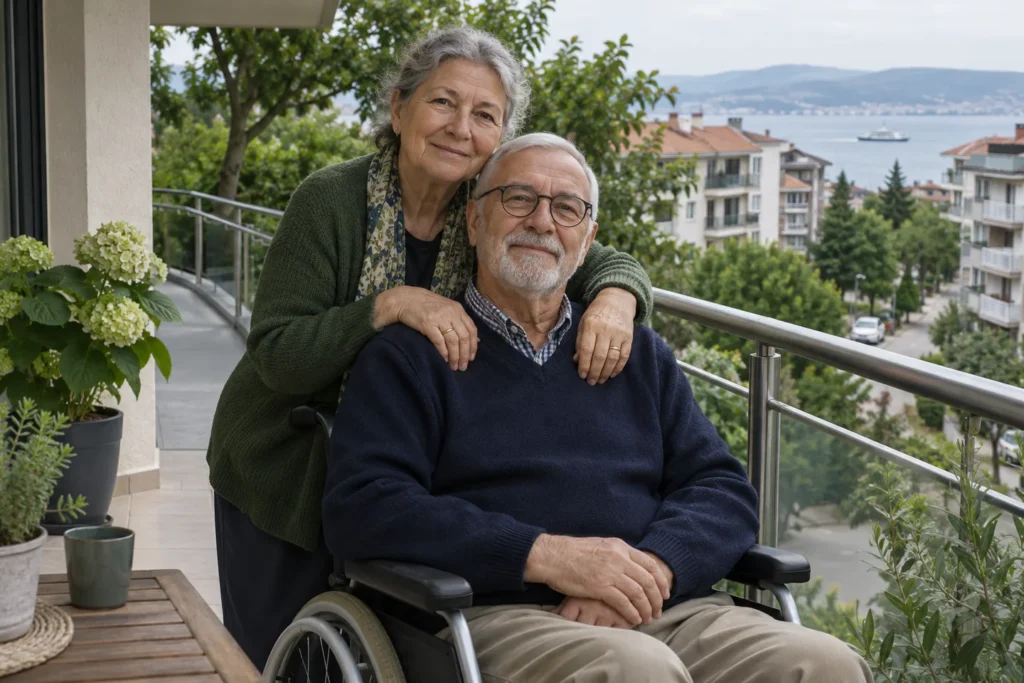
Set your own criteria before viewing
A flat can feel comfortable inside yet be difficult to reach every day. This check is for retired people already living in Türkiye or considering a move who want to assess a particular rental or purchase. It is not a substitute for medical advice or a technical examination of the building. Age alone does not determine what support a person needs.
Before the appointment, write down what matters to you: a step-free route, space for a walking frame, somewhere to sit along the way or an easy trip to a particular healthcare provider. Bring any mobility aid you use. If possible, do not rely on a video viewing alone. Ask someone you trust to accompany you if helpful, but let your own experience guide the assessment.
Walk from the pavement to the entrance
Start where you would normally arrive: the bus stop, parking space or place where a taxi can stop. Go to the building entrance and back. Look for slopes, lowered kerbs, uneven surfaces and narrow passages. Could you manage the route with shopping bags too? Is there a safe place to get out of a vehicle and somewhere to pause if needed?
Consider lighting and road crossings. A short distance on a map can be much more tiring because of traffic or a detour. If possible, repeat the route at another time of day. Photograph or note obstacles rather than relying on an advertisement that describes the location as easily accessible.
Try every transition into the flat
- Entrance: Can you reach and operate the door, bell and letterbox comfortably? Are there thresholds or steps before or after the door?
- Lift: Does it actually travel from the entrance level to the flat’s floor? Try the space and controls with your mobility aid. Ask what practical options exist if it breaks down.
- Flat: Check doorways, turning space and thresholds. Can you use the bathroom and shower as you need to? Also check windows, light switches and the route through the flat in the dark.
If changes appear necessary, describe them specifically and ask the landlord or seller what is possible. For a rental, clarify any agreement in writing before deciding. A ramp at the entrance does not automatically solve a bathroom obstacle or a step in front of the lift.
Make the actual healthcare journey
Choose a clinic, pharmacy or other provider you would realistically use. Do more than measure the distance: try the journey using your intended transport. Where does the trip begin and end? Will you need to change vehicles, wait or travel along a steep street? Check the entrance at your destination and whether there is somewhere to sit while waiting.
Ask the provider directly whether it offers the service you need, how appointments are arranged and which documents it requires. Clarify your individual insurance coverage and potential costs with your insurer and the provider beforehand. Being nearby does not guarantee an available appointment or payment of the bill.
Compare results and check documents separately
Compare two flats against the same points. You could mark each item “manageable alone”, “manageable with assistance” or “still unclear”. For example, flat A has a lift but three steps before it; flat B is farther from the clinic but has a step-free route to the door. The better fit depends on your abilities and the journey you expect to make regularly. Resolve open questions before committing.
If buying, TKGM services on e-Devlet can be a starting point for questions about land registry information. The service listing itself does not establish the ownership position of a particular flat or certify its accessibility. Ask the relevant authority which documents you need. Also request the existing DASK policy and check its details. DASK says information such as the address, gross floor area and construction type must be declared accurately. A policy is not certification of structural safety or accessibility. Insurance, registry information and an on-site access test answer different questions.
Official and specialist sources
Sources checked · 2026-11-18
Share
Document Preparation Check
Three short choices. Request your preparation list by email. No identity document, insurance number or medical information required.
Request my preparation list →